
How the Modern Roundabout Reached the United States
Part 4 of 8 | Approximately 11 minutes
Part 3 followed the development of the mini-roundabout and Britain’s early public-road experiments. Those projects showed that circulating priority and speed-controlling geometry could be adapted to intersections with different sizes, shapes, and traffic patterns.
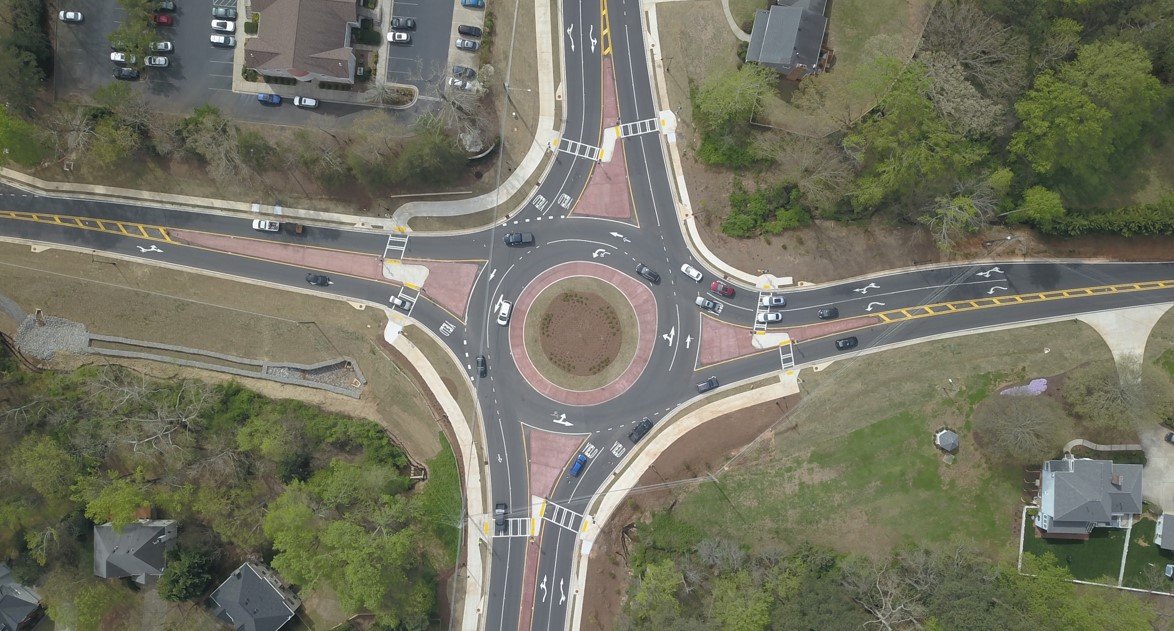
Bringing the modern roundabout to the United States presented a different problem. Circular intersections were not new to American engineers or drivers. Large traffic circles and rotaries had existed for decades, and many had developed reputations for high-speed merging, weaving, congestion, and crashes.
The modern roundabout therefore arrived in a country that already believed it understood the concept. Early advocates had to explain that the newer design operated differently, demonstrate that it could work under American conditions, and develop guidance that agencies could use without relying entirely on foreign manuals or a small number of specialists.
In This Series
- Before the Modern Roundabout
- The Modern Roundabout Is Born
- From the Laboratory to the Street
- Crossing the Atlantic ← You are here
- How Roundabout Design Evolved
- Designing for People Outside the Vehicle
- How Roundabouts Are Evaluated and Chosen
- Roundabouts Today
In This Part
- Why the United States remained skeptical
- Why terminology created confusion
- The first modern U.S. roundabout in 1990
- Maryland’s first state roundabout in 1993
- What Vail’s 1995 “first” claim actually means
- How early projects created an American evidence base
- How national guidance changed the conversation
Why the United States remained skeptical
The United States had built large circular intersections during the first half of the 20th century. Many of those intersections allowed fast entries, required drivers to merge or weave across several lanes, and sometimes gave entering traffic priority over circulating traffic.
As traffic volumes increased, the weaknesses of those designs became increasingly visible. According to the Federal Highway Administration’s historical account, high crash experience and congestion caused rotaries to fall out of favor in the United States after the mid-1950s.
That history created an obstacle for the modern roundabout. To many members of the public, elected officials, and transportation professionals, a circular intersection was a circular intersection. A proposal for a roundabout could therefore sound like a proposal to revive a treatment that had already been tried and rejected.
The newer design also lacked an established American institutional structure. Engineers interested in roundabouts often had to consult foreign design guides, work with specialists who had international experience, or use guidance developed by one of the few states already studying the treatment.
The foreword to the FHWA’s 2000 national guide identified this lack of nationwide planning, design, and performance guidance as one reason American agencies had been hesitant to recommend and install roundabouts.
The difficulty was therefore not simply unfamiliarity. American drivers were familiar with circular intersections, but much of that familiarity came from designs that did not follow modern operating and geometric principles.
Why terminology created confusion
The words roundabout, traffic circle, and rotary have not always been used consistently in the United States. An intersection might be called a traffic circle because of its age, a rotary because of regional custom, or a roundabout because the term sounded more current.
The name alone does not establish how the intersection operates.
The Nevada Department of Transportation distinguishes modern roundabouts from older circles and rotaries through several operating and geometric characteristics. Modern roundabouts are generally smaller, require sharper curvature at the entry, operate at lower speeds, and require entering drivers to yield to circulating traffic.
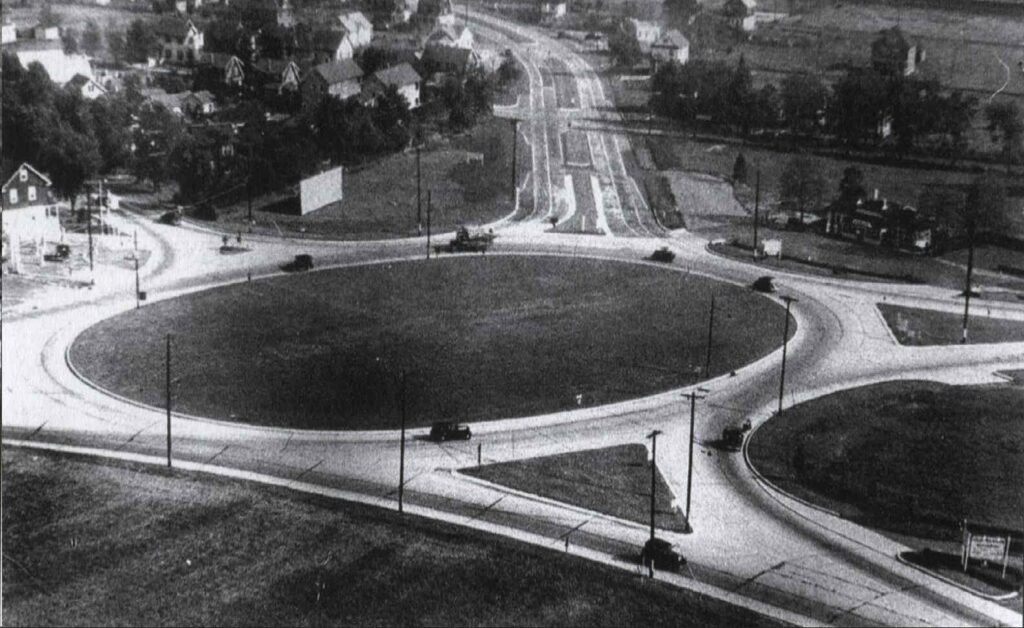
Older circular intersections may have large diameters, high-speed tangent entries, stop signs or traffic signals within the circle, or priority arrangements that differ from modern practice. Some also provide enough distance for drivers to weave between lanes before reaching an exit.
This distinction matters when identifying historical “firsts.” The United States had circular intersections long before 1990. The question is not when the first American circle was constructed. It is when an intersection using the operating and geometric principles of the modern roundabout was constructed. Even that question requires careful consideration because different agencies may classify an installation differently or use different definitions.
Las Vegas, 1990: the first modern U.S. roundabout
The Nevada Department of Transportation identifies a Las Vegas installation constructed in 1990 as the first modern traffic roundabout in the United States. The Insurance Institute for Highway Safety uses a slightly broader formulation, stating that the first modern roundabouts in the United States were constructed in Nevada in 1990.

Both sources agree on the important historical point: 1990 marks the defensible beginning of modern roundabout construction in the United States.
The word modern is essential. The Las Vegas installation was not the first American intersection with a central island or one-way circulation. It represented the introduction of a different operating system, based on entering traffic yielding to circulating traffic and geometry intended to reduce speed.
Although, its significance should not be exaggerated. One installation did not immediately establish a national design practice. It showed that the modern roundabout could be built in the United States, but other agencies still had to determine whether the concept would work under their own legal, geometric, traffic, and public-acceptance conditions.
Early American roundabouts were therefore more than construction projects. Each one functioned as a local demonstration that could either strengthen or weaken the case for future installations.
Maryland, 1993: building a state program
Maryland approached the idea more systematically. The Maryland Department of Transportation State Highway Administration (MDOT SHA) began considering roundabouts during the late 1980s. The agency researched international experience, developed design guidance, and created procedures for selecting appropriate sites.
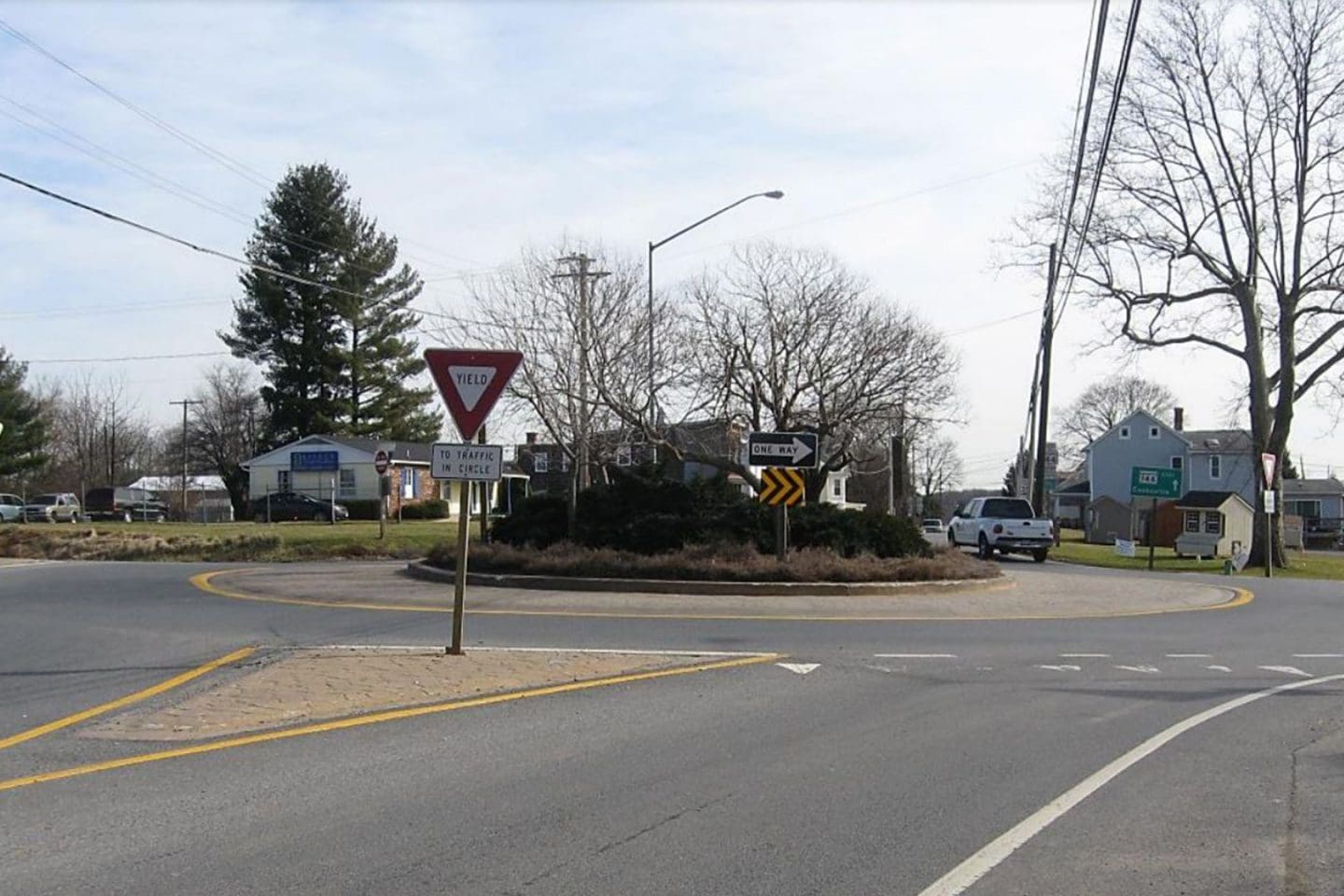
In 1993, Maryland constructed its first modern roundabout at MD 94 and MD 144 in Lisbon, Howard County. The project was intended primarily to address the intersection’s crash history.
MDOT SHA reports that the intersection had averaged approximately eight police-reported crashes per year before conversion and approximately two per year after the roundabout was installed. That site-specific comparison is not the same as a controlled national safety study, but the result gave the agency a practical reason to continue evaluating the treatment.
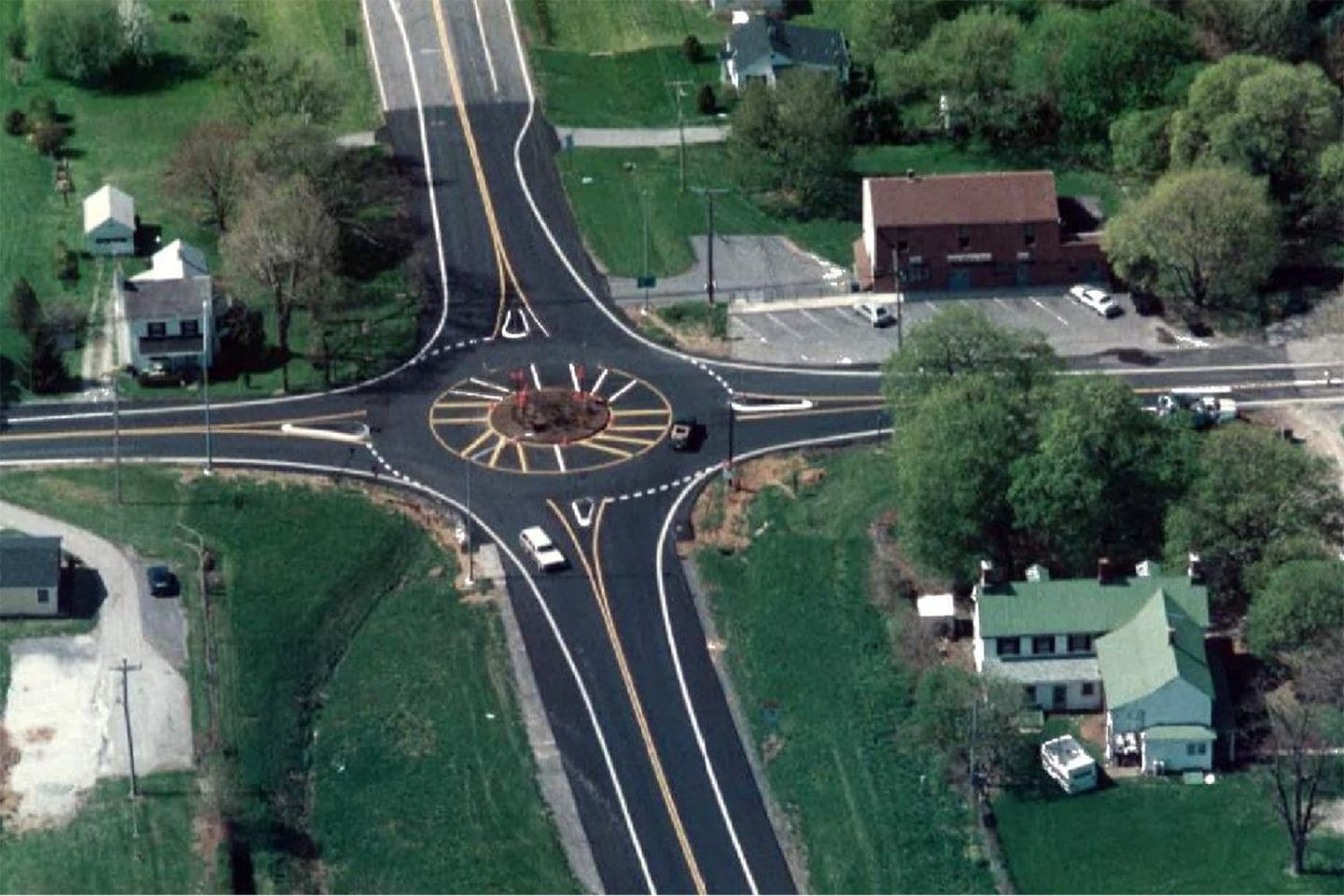
The Lisbon project also illustrates how public opinion could change after drivers gained experience with a roundabout. An FHWA review of the early evidence states that most Lisbon residents opposed the roundabout one year before it opened. Four months after opening, a local citizens’ committee voted overwhelmingly to make it permanent.
This did not mean that every later proposal would be accepted or that every location would perform equally well. It demonstrated that opposition based on an unfamiliar plan could change after people experienced the completed intersection.
Maryland’s historical claim is narrower than Nevada’s. Lisbon was not the first modern roundabout in the United States. It was Maryland’s first, and it became the beginning of an early continuing state roundabout program.
Vail, 1995: the first roundabout interchange
Another frequently repeated “first roundabout” claim belongs to Vail, Colorado. The qualifier is important here as well.
In 1995, roundabouts were incorporated into the I-70-Vail Road interchange. A paper by Leif Ourston and Greg Hall, documented in the Transportation Research Board’s TRID record, describes the project as North America’s first modern roundabout interchange. The Town of Vail similarly identifies it as the first modern roundabout interchange in the nation.
A roundabout interchange uses one or more roundabouts to organize movements between a freeway and the connecting street system. Instead of placing conventional signalized intersections at the ramp terminals, the design uses circulating priority and roundabout geometry to manage ramp, turning, and through movements.
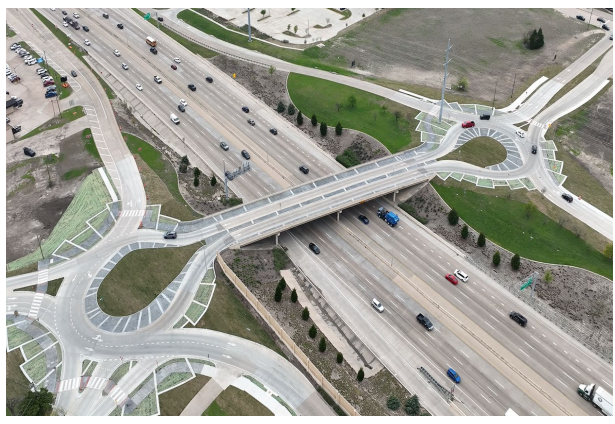
This was a much larger application than a single roundabout replacing a stop-controlled local intersection. It demonstrated that the concept could be applied where traffic arrived from freeway ramps, demand could change sharply during peak travel periods, and queues had to be prevented from extending back toward the freeway.
Vail also had to address the public-communication problem created by unfamiliarity. The FHWA’s 2000 guide later used material from that project as an example of how brochures and other educational tools could explain a proposed roundabout and show people how to use it. Vail’s 1995 project, the first modern roundabout interchange, was therefore an important national milestone.
From individual projects to an American body of evidence
During the 1990s, modern roundabouts appeared at a growing but still limited number of American intersections. These projects included intersections with different forms of control, traffic volumes, numbers of legs, lane configurations, and surrounding land uses.
That variation was useful because it demonstrated that a roundabout was not limited to one narrow type of site. It also made general conclusions difficult. A result from a small single-lane roundabout could not automatically be transferred to a large multilane installation or a freeway interchange.
The Transportation Research Board began organizing this scattered experience in NCHRP Synthesis 264, Modern Roundabout Practice in the United States, published in 1998. The synthesis used information supplied by state and local agencies on 38 individual roundabouts.
The report addressed more than geometric dimensions. It examined planning, capacity, delay, safety, costs, site-selection criteria, pedestrians, bicyclists, and people with vision disabilities. It also compared American practices with guidance from countries that had considerably more roundabout experience.
The number 38 shows both progress and limitation. The United States had enough installations to begin comparing domestic practice, but the body of evidence remained small. American engineers still depended heavily on international research, professional judgment, and the results of a limited number of local projects.
More formal safety evidence followed. A 2001 study published by the American Public Health Association evaluated 24 American intersections converted from stop-sign or traffic-signal control to modern roundabouts. Using an empirical Bayes method to account for factors including traffic changes and regression to the mean, the researchers estimated reductions of 38% in crashes of all severities and 76% in injury crashes. Fatal and incapacitating-injury crashes were estimated to have declined by approximately 90%.
Those results did not establish that every roundabout would produce the same reduction. The sites represented a limited sample, and safety performance still depended on traffic conditions and geometric design. The study nevertheless provided stronger American evidence that the safety results observed internationally could also occur in the United States.
The 2000 FHWA guide creates a common starting point
The decisive institutional step came in June 2000, when the Federal Highway Administration published Roundabouts: An Informational Guide.
Before the guide, an American practitioner interested in roundabouts might have to assemble information from British, Australian, French, or other international sources. A designer might also rely on a specialist consultant or a state guide that was not used elsewhere in the country.
The FHWA guide brought those sources together with the emerging American experience. It covered planning, operations, safety, geometric design, signs, pavement markings, landscaping, closely spaced roundabouts, and roundabout interchanges. It also recognized several categories of roundabouts, from mini-roundabouts to larger rural and multilane designs.
This did not make the guide a compulsory design standard. The document explicitly stated that it did not constitute a standard, specification, or regulation. It was also not a warrant requiring an agency to select a roundabout whenever particular traffic conditions occurred.
Its importance was that it established a shared technical starting point. Engineers in different states could now use common terminology, compare similar geometric elements, apply documented evaluation methods, and explain the design using a national reference.
The modern roundabout had crossed the Atlantic before 2000. Nevada, Maryland, Colorado, and other early adopters had already built working examples. The FHWA guide marked a different transition: the treatment was moving from a collection of specialized projects toward a recognized part of American intersection practice.
The idea that crossed the Atlantic was not a fixed British drawing. It was a coordinated operating system in which priority, speed, geometry, and driver expectations had to support one another. American designers would continue modifying that system as they gained experience with multilane layouts, rural highways, trucks, signing, lane selection, and different road users.
That next period of refinement is covered in Part 5.
← Previous: Part 3, From the Lab to the Street
Next: Part 5, How Roundabout Design Evolved →
Leave a Reply