
Author: Caspian Ale
-
When a Crosswalk Request Is About More Than a Crosswalk
A crosswalk request during a neighborhood traffic calming meeting raised a broader question: what problem are we actually trying to solve? The discussion highlighted the difference between pedestrian connectivity, traffic calming, perceived safety, and the engineering judgment needed to select the right treatment. Read more →

-
History of Roundabouts, Part 5: How Roundabout Design Evolved
Roundabout design evolved beyond choosing a central-island size. Part 5 examines fastest-path speed checks, multilane path overlap, truck accommodation, rural speed transitions, and the shift toward performance-based geometry. Read more →

-
History of Roundabouts, Part 4: Crossing the Atlantic
The modern roundabout reached the United States in 1990, but overcoming decades of skepticism required more than one installation. Early projects in Nevada, Maryland, and Colorado built an American evidence base, distinguished modern roundabouts from older traffic circles, and led to national FHWA guidance. Read more →

-
What We Lose, or Learn to Hide
Being around children can quietly remind us of something we slowly learn to hide as adults. Their openness, curiosity, and willingness to engage do not disappear all at once, but fade under the weight of hesitation, expectations, and self-filtering. Maybe the real work is not finding that part of ourselves again, but allowing it back. Read more →

-
History of Roundabouts, Part 3: From the Lab to the Street
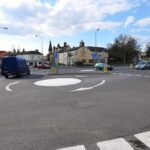
Britain’s modern roundabout principles moved from controlled experiments to public roads through the development of mini-roundabouts. This part examines the early trials in Peterborough, Cardiff, and Hillingdon, including what they demonstrated about capacity, delay, pedestrians, and safety. Read more →
-
History of Roundabouts, Part 2: The Modern Roundabout Is Born
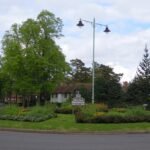
The modern roundabout emerged in Britain through more than a change in priority. This part examines Frank Blackmore’s research, the 1966 give-way rule, and the geometric changes that began controlling entry speed and vehicle paths. Read more →
-
History of Roundabouts, Part 1: Before the Modern Roundabout
Roundabouts did not begin as the compact, yield-controlled intersections used today. Part 1 traces monumental circles, Columbus Circle, early one-way gyratory systems, and the large, high-speed rotaries that shaped public perceptions before the modern roundabout emerged. Read more →

-
Connected to Nothing
I stood alone on a pale pink surface that stretched endlessly in every direction. As a strange warm fluid rose around me, dissolving the boundary between myself and the world, I experienced something difficult to describe: the feeling of being connected to nothing, and somehow, at the same time, connected to everything. Read more →

-
History of Traffic Signals, Part 5: The Modern Signal and Its Future
Modern traffic signals operate within increasingly data-driven and connected systems. Part 5 explores adaptive control, performance measurement, signal warrants, Safe System principles, V2X, artificial intelligence, and the continuing responsibility of public agencies to manage these technologies effectively. Read more →
-
History of Traffic Signals, Part 4: Expanding Whom and What the Signal Serves
Traffic signals gradually expanded beyond serving general motor-vehicle traffic. Part 4 examines pedestrian and bicycle accommodations, turn arrows, LED displays, transit priority, and emergency-vehicle preemption, along with the operational and safety considerations these capabilities introduced. Read more →