
Part 4 of 5 | Approximately 7 minutes
As traffic signals became more capable, their role expanded beyond controlling general motor-vehicle traffic. This part examines how signals evolved to provide clearer and more accessible information for pedestrians, bicyclists, and turning drivers. It also follows the transition from incandescent lamps to LEDs and explains how priority and preemption allow certain movements or events to alter normal signal operation. These developments made signals more useful and precise, but also introduced new operational, maintenance, safety, and policy considerations.
In This Series
- Before the Modern Traffic Signal
- From Isolated Signals to a National System
- The Signal Becomes Responsive and Networked
- Expanding Whom and What the Signal Serves ← You are here
- The Modern Signal and Its Future
In This Part
- The Signal Expands Beyond Motor Vehicles
- Turn Movements, Arrows, and More Precise Messages
- From Incandescent Lamps to LEDs
- Priority and Preemption
The Signal Expands Beyond Motor Vehicles
Early traffic-signal development centered heavily on motor-vehicle conflict, but pedestrians were never absent from the intersection. The London signal itself was installed in a setting with substantial pedestrian activity. The MUTCD addressed pedestrian signals and warrants in its early decades, including revisions in 1939. The form and accessibility of pedestrian control continued to evolve since then.
Word messages such as WALK and DON’T WALK were common in the United States. Symbolic displays later provided a walking person for the walk interval and an upraised hand for the don’t-walk condition. The 2009 MUTCD required symbolic pedestrian indications rather than word-only displays. Under the current MUTCD, the steady walking person permits pedestrians to begin crossing. The flashing upraised hand means that a pedestrian should not start, but a pedestrian who began during WALK continues toward the far side, median, or designated refuge. The steady upraised hand means that the pedestrian should not enter the roadway. (FHWA history; 11th Edition MUTCD, Part 4)
Countdown displays added information about the remaining time in the pedestrian change interval. FHWA identifies pedestrian countdown signals as a significant addition in the 2003 MUTCD. The display does not create a separate right-of-way rule. It simply communicates how much time remains. (FHWA history)
Accessible Pedestrian Signals, or APS, communicate WALK and related information in nonvisual formats such as audible tones, speech messages, and vibrotactile indications. Accessible push-button features can also provide locator tones and tactile arrows. The 2000 MUTCD added APS material, and accessibility requirements have continued to develop through the MUTCD, ADA implementation, and the U.S. Access Board’s Public Right-of-Way Accessibility Guidelines (PROWAG).
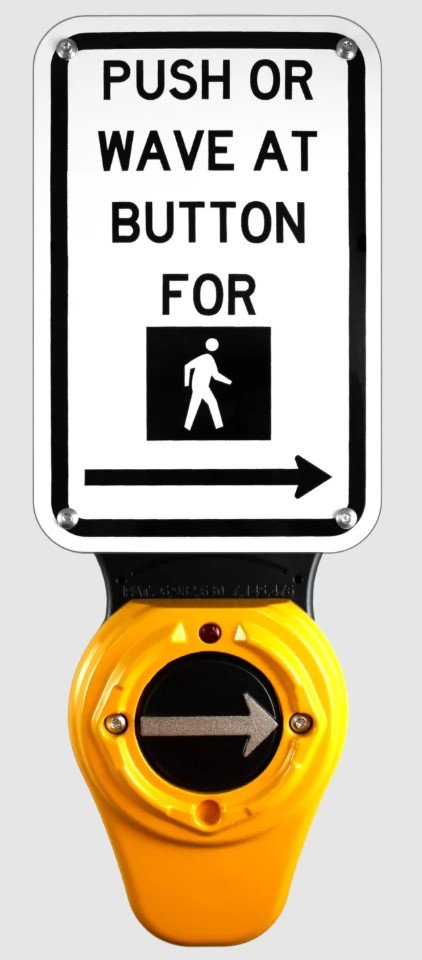
The Access Board issued final PROWAG guidelines in August 2023. Those guidelines do not automatically become enforceable under every federal law until adopted by the agency responsible for the applicable standard. The USDOT adopted specified provisions for new construction and alterations of transit stops in the public right of way in December 2024. (U.S. Access Board PROWAG)
Leading pedestrian intervals (LPI) use timing rather than new hardware to reduce turning conflicts. An LPI displays WALK before parallel motor vehicles receive green, usually giving pedestrians 4-7 seconds to establish themselves in the crosswalk. FHWA identifies the LPI as a Proven Safety Countermeasure because it improves pedestrian visibility and reduces conflicts with turning vehicles. (FHWA Leading Pedestrian Interval)
Bicycle signal faces represent a related expansion. The 11th Edition MUTCD defines green, yellow, and red bicycle-symbol indications for bicyclists. This allows agencies to assign bicycle movements a distinct phase where an ordinary vehicle signal face would not clearly communicate the intended operation. (11th Edition MUTCD, Part 4)
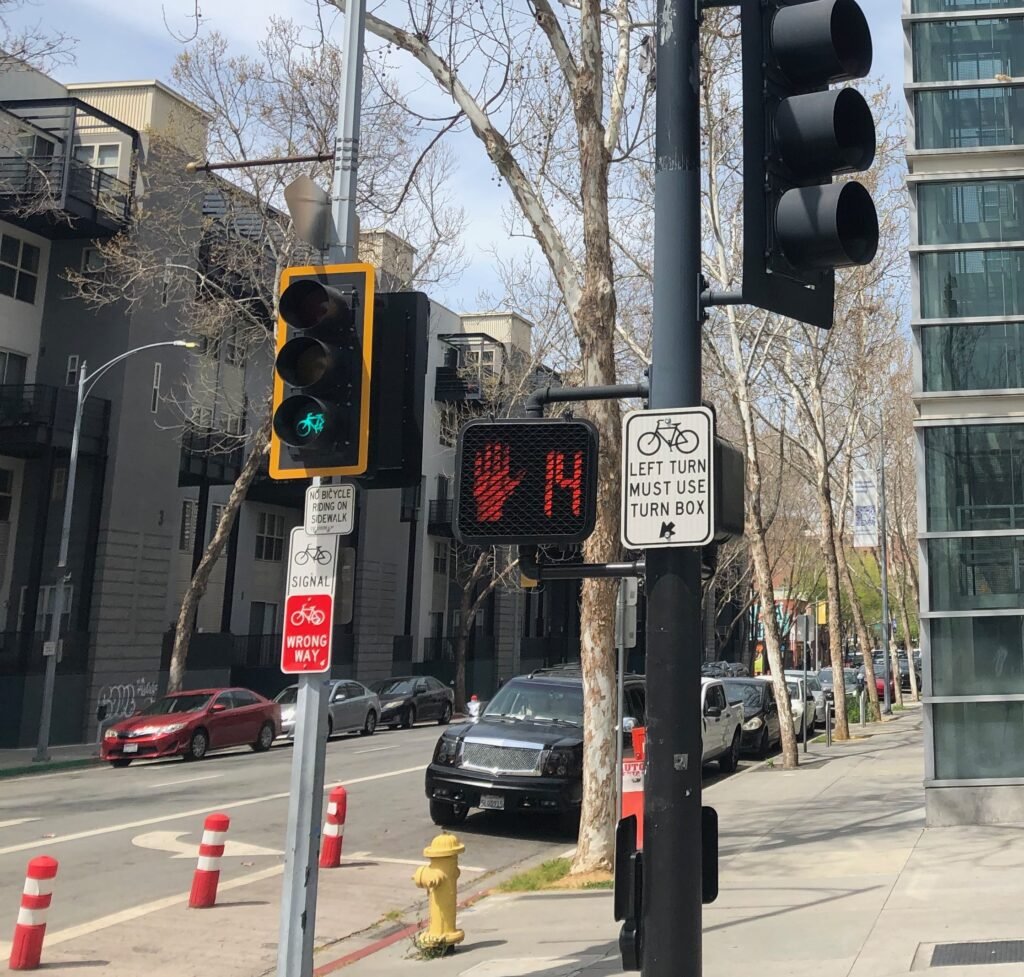
These changes show that the history of the signal is also a history of who is made visible to the control system. A detector that does not reliably recognize a bicycle, a push button that cannot be found or used by a person with a disability, or a timing plan that assumes an inappropriate walking speed can exclude users even when the display hardware is technically functioning.
Turn Movements, Arrows, and More Precise Messages
The circular green indication can permit several movements, subject to yielding and other controls. As intersections became larger and turning conflicts became more complex, agencies increasingly used arrow indications and separate phases to communicate which movements were protected, permitted, or prohibited.
A protected left-turn phase separates the left turn from conflicting opposing traffic with a green arrow. Permissive operation allows the turn after yielding to opposing traffic and pedestrians. Protected-permissive operation combines the two forms. Each choice trades among conflict exposure, capacity, delay, queueing, driver expectation, and pedestrian service.
The flashing yellow arrow provides a distinct permissive left-turn message. The 2009 MUTCD introduced it into the national manual after research and experimentation. Under the current MUTCD, a driver facing a flashing yellow arrow may cautiously enter to make the indicated movement but must yield to conflicting road users. This indication separates the permissive-turn message from the circular green used for through traffic and gives agencies more flexibility in protected-permissive phasing. (FHWA history; 11th Edition MUTCD, Part 4)
Signal-face placement also evolved. Post-mounted heads, span-wire installations, and mast arms address visibility, roadway width, physical constraints, cost, wind loading, and maintenance. Backplates increase contrast between the indication and its background, and retroreflective borders can improve nighttime conspicuity. These physical details are not decorative. They affect whether a road user detects the signal early enough to understand and respond.
From Incandescent Lamps to LEDs
For much of signal history, incandescent lamps illuminated colored lenses. Light-emitting-diode (LED) modules later changed the signal’s energy use, maintenance cycle, and failure characteristics. The US Department of Energy describes LED traffic-signal use as an established practice dating to the 1980s and identifies longer life, lower energy use, and the ability to retain partial output if individual diodes fail as advantages over a single-filament incandescent lamp. (U.S. Department of Energy traffic-signal checklist)
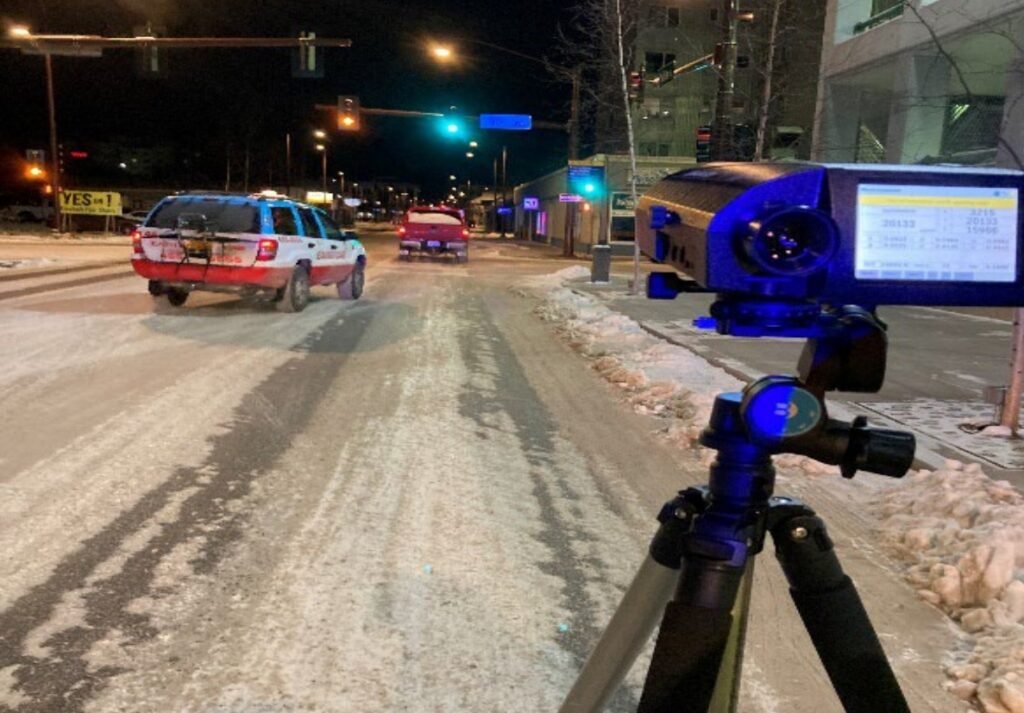
LEDs also introduced different engineering considerations. Their lower power demand affects cabinet electrical loading and can extend the useful duration of battery backup. Their lower heat output, beneficial in energy terms, can allow snow or ice to remain on a signal face under some winter conditions. FHWA has published specific research on LED module performance and snow accumulation. (FHWA Traffic Signal Program Handbook; FHWA LED module research)
The shift to LEDs illustrates a recurring pattern in signal history. A new technology can solve one set of problems and create another set of operational or maintenance questions. Adoption should therefore be evaluated as a system change, not only as a component substitution.
Priority and Preemption
Traffic signals do not always follow their normal sequence. Preemption transfers the signal into a special control mode for a higher-priority event such as a train, emergency vehicle, light-rail vehicle, school bus, or movable bridge. The purpose may be to avoid a severe conflict, clear a queue from railroad tracks, or provide right of way to an emergency response. Technologies used to request preemption have included optical, acoustic, loop-based, radio, and other detection or communications methods. (FHWA Traffic Signal Timing Manual, Chapter 9)
Preemption is not the same as priority. Preemption interrupts normal operation and can shorten or omit portions of the ordinary sequence subject to applicable requirements. Priority, such as transit signal priority, generally makes smaller adjustments within the control logic. A bus may request a green extension, an early green, or another strategy intended to reduce delay and improve schedule reliability without taking complete control of the intersection. (FHWA Traffic Signal Timing Manual, Chapter 9)
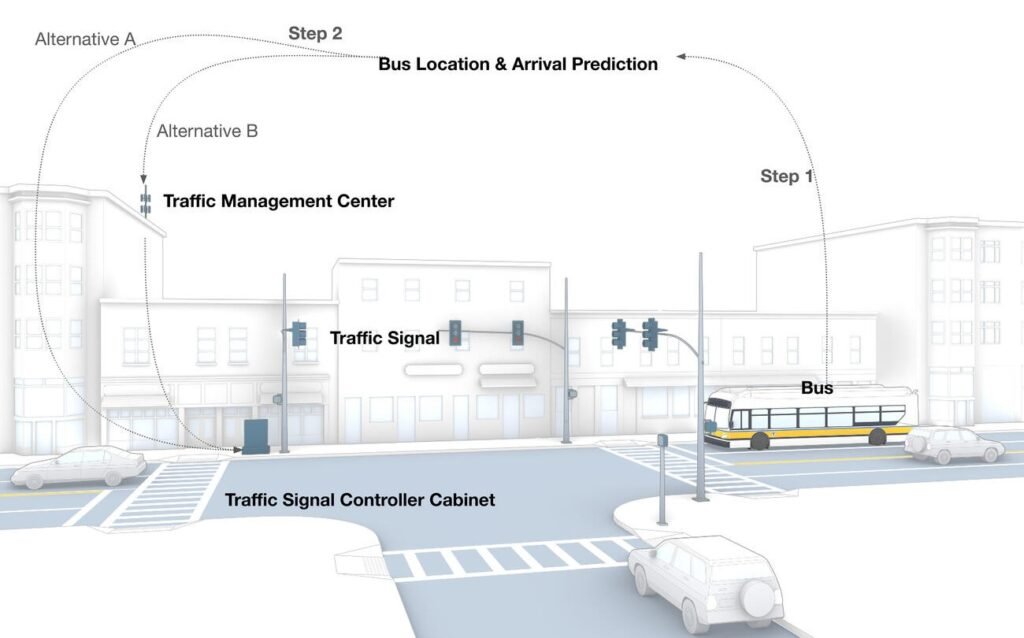
Both functions require careful transition logic. Serving one request can interrupt coordination, create queues on conflicting approaches, affect pedestrian service, and require time for the controller to return to its normal sequence. Railroad preemption is especially safety-critical because vehicles queued across tracks must be cleared before the train arrives. Emergency preemption can also create a hazard if responders assume they have received control when a conflicting preemption has priority.
The history here is not only technological. It concerns policy. The controller must reflect an agency’s decisions about which requests qualify, which have precedence, how often they can interrupt ordinary service, and how the system recovers afterward.
By this stage, the traffic signal had become more accessible, more precise in the messages it displayed, and more capable of responding to special transportation needs. Part 5 examines the modern signal as a data-driven and actively managed system, including adaptive control, performance measurement, signal warrants, Safe System principles, connected-vehicle technology, and artificial intelligence.
← Previous: Part 3, The Signal Becomes Responsive and Networked
Leave a Reply